


Google Reviews
Why Buy a Commercial Espresso Machine From Visions
Most online retailers ship a box and move on. We ship a commercial espresso machine — and follow up with service, training support, and genuine parts availability. Whether you’re buying your first professional coffee machine for a new café or upgrading an industrial espresso machine in a high-volume restaurant, Visions is a Seattle-based authorized dealer with direct manufacturer relationships, certified technicians on staff, and parts stocked for every commercial espresso machine brand we carry.
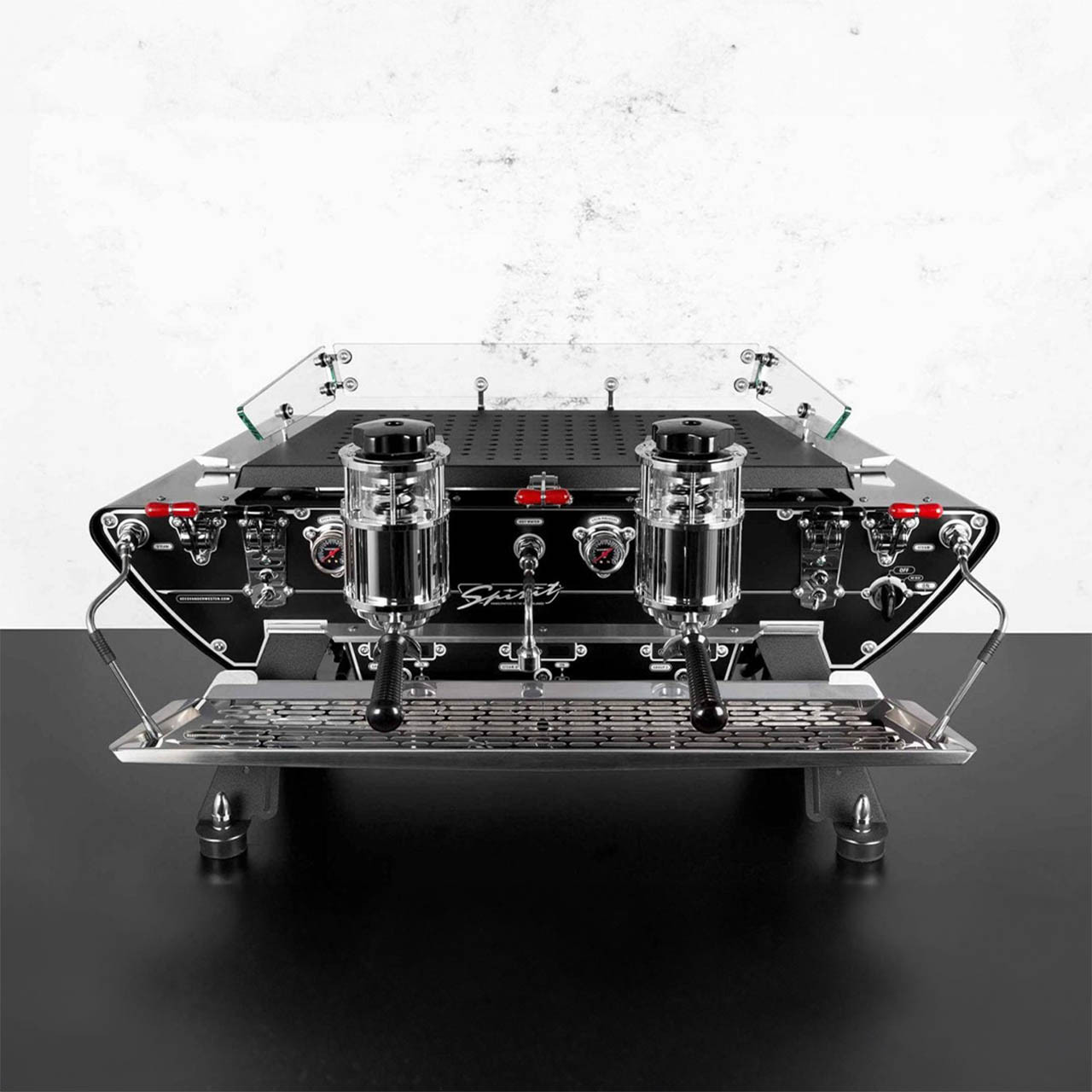
- Kees Van Der Westen semi-exclusive access. We’re one of the very few authorized KVDW dealers in the United States. If you want a Spirit, Mirage, or Idrocompresso — and want someone who actually knows the machine — this is the right place. We handle lead times honestly and stock the parts that fail.
- All the major commercial espresso machine brands under one roof. Nuova Simonelli, Victoria Arduino, La Marzocco, Rocket Espresso — we carry them all and know them all. Our technicians service these machines, which means we give you real advice, not just spec sheets.
- Bundle pricing for full café buildouts. A commercial espresso machine is only as good as the grinder it’s paired with. We build custom bundle packages — machine, commercial grinder, and auto tamper — at a better combined price than buying each piece separately.
- Commercial espresso machines for sale — including open-box. Several machines rotate through as open-box or demo units — same machine, meaningfully lower price. Stock changes regularly; worth a look before you commit to new.
- Seattle-based installation and service. Certified technicians. Parts on the shelf. A repair that should take three hours doesn’t take three weeks.
How to Choose a Commercial Espresso Machine
Start with your volume
Estimate your busiest hour, then add 20% headroom. Most 2-group professional espresso machines handle 80–150 drinks per hour — more than enough for a steady morning rush at a mid-sized café. If you’re consistently projecting over 150 at peak, a 3-group machine is the right call. Undersizing costs more than oversizing: lost sales, shortened equipment lifespan, and barista frustration compound fast. Our top-rated commercial espresso machines for café and restaurant page breaks down shots-per-hour for each model we carry.
Know your boiler type
Heat-exchange machines — the Nuova Simonelli Appia Life is the benchmark — use one large boiler to handle both brew water and steam. Reliable, cost-effective, trusted by thousands of cafés worldwide. Multi-boiler systems give each group head its own dedicated brew boiler and a separate steam boiler. The Victoria Arduino Eagle Tempo and Black Eagle both use T3 multi-boiler technology — independent temperature control per group head. For specialty cafés where extraction precision on light roasts isn’t optional, multi-boiler is worth the premium. The SCA’s brewing protocols define exactly what these systems are designed to meet.
Match the machine to your operation type
A café espresso machine and a restaurant espresso machine solve different problems. Cafés need extraction quality and steam capacity for milk drinks; restaurants and hotels need consistency across untrained staff and fast throughput during meal service. Foodservice operations, catering companies, and office coffee programs often do better with super-automatic commercial coffee machines that eliminate barista dependency entirely. Our commercial espresso machine buying guide covers each operation type in detail.
Price serviceability like a cost, not a feature
A machine with a 3-week part lead time will cost you more in downtime than a pricier machine with local service support. Ask the dealer: do your technicians service this brand, or just sell it? At Visions, our techs work on every piece of commercial espresso equipment we carry. That’s a meaningful distinction when something fails on a Tuesday morning.
Budget total cost of ownership, not just sticker price
Factor in: a 220V dedicated circuit and plumbing (coordinate with a licensed electrician and plumber before your machine arrives), water filtration ($200–$500 upfront — scale buildup voids most warranties and is the leading cause of early machine failure), and annual professional service. The commercial coffee machines that look expensive at purchase often carry the lowest lifetime costs because they’re engineered to be serviced, not replaced.
Commercial Espresso Machine Types
| Type | Best For | Brands at Visions |
|---|---|---|
| Semi-automatic (lever / manual paddle) | High-craft cafés, experienced barista programs | Kees Van Der Westen, Slayer, Synesso |
| Volumetric (automatic dosing) | Most specialty cafés — consistent shots across baristas and rushes | Nuova Simonelli, Victoria Arduino, Rocket, La Marzocco |
| Super-automatic | Hotels, restaurants, offices — consistent output with minimal barista dependency | Eversys, Franke |
| Industrial / high-volume | Large-format foodservice, stadiums, convention centers, chain operations | Eversys, Franke, commercial coffee brewers |
Frequently Asked Questions
- What’s the difference between a commercial and a prosumer espresso machine?
- Commercial machines are engineered for continuous operation — 150 to 400+ shots per day, 5–6 days per week, year after year. They run on 220V power, require a direct water line, and use commercial-grade boilers and group heads designed for on-site service. Prosumer machines are excellent at home volumes. They won’t hold up under café-level demand.
- How much does a commercial espresso machine cost?
- Entry-level 2-group commercial espresso machines for sale start around $5,000–$7,500. Mid-range professional espresso machines for cafés — Rocket R9, Victoria Arduino Eagle Tempo — run $14,000–$22,000. Top-tier and custom machines from La Marzocco, Slayer, and KVDW range from $20,000 to $65,000+. Budget separately for installation, water filtration, and an annual service contract.
- Do commercial espresso machines require NSF certification?
- Yes, for commercial food service use in the United States. NSF certification confirms food-safe components and compliance with health department sanitation standards. Every commercial machine we carry is NSF-certified.
- What do I need to install a commercial espresso machine?
- A 220V dedicated electrical circuit, a direct plumbed water line, and a drain. Water filtration is non-negotiable — scale buildup from untreated water is the leading cause of premature machine failure and typically voids the warranty. Coordinate with a licensed plumber and electrician before your machine arrives. We walk every buyer through the requirements.
- What’s the best commercial espresso machine for a restaurant?
- Restaurants need consistency across rotating staff and steam capacity for high-volume milk drink service. Volumetric machines like the Nuova Simonelli Appia Life are the most common choice — programmed dosing means every server pulls a consistent shot. Hotels and large foodservice operations should also consider super-automatic commercial coffee machines from Eversys or Franke.
- Do you offer financing on commercial espresso machines?
- Yes. We work with equipment financing partners for qualified buyers. Reach out through our consultation booking to discuss options.
Building out a café or upgrading your bar? Our equipment specialists work with café owners and operators every week — matching the right machine to the right operation and handling everything from selection through installation. Book a free consultation.